landscape
DCFW placemaking exchange draws more than 120 professionals across four Welsh regions
The Design Commission for Wales says its autumn Co-Create series produced five next steps for placemaking, a downloadable facilitator resource and recommendations it will take to national decision-makers.
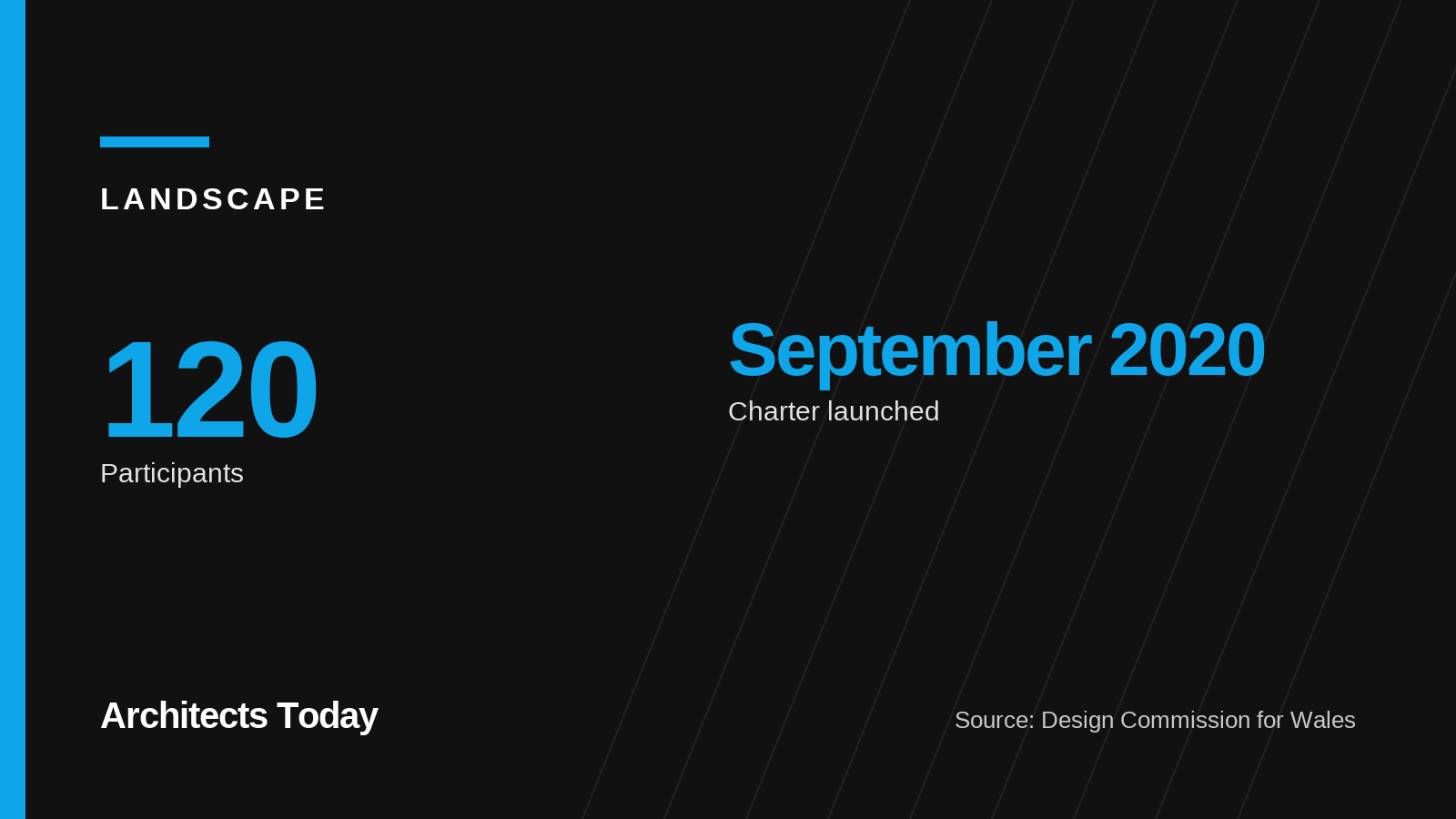
More than 120 built environment professionals took part in the Design Commission for Wales' Co-Create Placemaking Exchange this autumn, a series of four regional events that has produced five next steps for placemaking across Wales.
The Design Commission for Wales (DCFW) said on 27 November that it and the Placemaking Wales Partnership would take participants' recommendations on regional transport integration, local authority capacity and long-term maintenance funding into its national conversations with partners and decision-makers.
The series was billed as a joint Creu Lleoedd Cymru Placemaking Wales and DCFW event series. Events were held on 10 September at Canolfan S4C Yr Egin in Carmarthen, 1 October at Theatr Clwyd in Mold, 12 October at Aberystwyth Arts Centre and 9 November at Cornerstone on Charles Street, Cardiff.
Each session was free to attend, open to all Placemaking Wales Charter signatories and all built environment disciplines practising in Wales, and accredited for three hours of structured CPD across RIBA, RTPI, RICS, the Landscape Institute, ICE, CIHT, CIOB and CIBSE. Each event included a facilitated regional participatory "Placemaking Exchange" mapping activity.
Regional findings
DCFW said the emphasis differed from region to region. In South West Wales the discussion centred on early community involvement, stronger regional transport links and better integration of green spaces to encourage local use.
In North Wales participants focused on building a unified regional vision, broadening the workshop to inform others further afield across registered social landlords, local authorities and clients, and breaking down institutional silos. Mid Wales emphasised climate resilience, active travel and practical ways to turn existing place plans into delivered projects through local champions.
The final event in South East Wales championed hyperlocal, bottom-up engagement, moving beyond what DCFW described as superficial public-realm fixes, and securing long-term funding for maintenance.
Five next steps
DCFW distilled participant feedback into five steps. Collaboration ranked as the top priority in every region, with face-to-face, cross-disciplinary discussion seen as a way to spark fresh thinking and build working relationships.
The second step is that community engagement must be early, hyperlocal and bottom-up. DCFW reported participants calling for more resources for local authorities so that Local Development Plans and Strategic Development Plans do not feel top-down, and identified feeding local input up to strategic scales as a key challenge.
Third, participants recognised that placemaking applies at every scale, from temporary pop-up interventions in a single building to regional strategies, and that it needs long-term funding, maintenance and stewardship. Fourth, connectivity and resilience were a shared national thread, covering public transport, active travel, green infrastructure and climate action, which DCFW said showed the need for collaboration across local authority boundaries.
The fifth step is sharing best practice. Case studies on place planning frameworks in Ceredigion and community-led regeneration in Newport were presented at the events, and DCFW said participants also showed interest in learning from places outside Wales.
The resource and what happens next
DCFW said it adapted the workshop format from event to event in response to feedback, and the series has now produced a downloadable placemaking resource with a facilitator's guide to encourage further exchanges across Wales, whether within organisational teams or between professionals. The commission said it would offer training and facilitation based on the resource in the near future.
Following what it described as strong support for dedicated thematic sessions, including culture-led placemaking, DCFW said it was exploring a live project site visit and guided walkabout for future events, and wants to hold a national Co-Create event to broaden participation within the Charter network.
Background
DCFW describes itself as the national advisory body for design excellence across Wales' built environment, set up by the Welsh Government and supported by a panel of 35 independent built environment professionals.
The Placemaking Wales Charter sets out six placemaking principles that signatories agree to promote. DCFW said it brought together the Placemaking Wales Partnership, a multi-disciplinary group representing professions and organisations in the built and natural environment, working with the Welsh Government. The Partnership's members became the Charter's first signatories when it was launched online in September 2020.
Announcing the launch on 23 September 2020, the Welsh Government said the Partnership brought together more than 25 organisations and described the Charter as putting quality, sustainability and community at the heart of planning. Carole-Anne Davies, Chief Executive of the Design Commission for Wales, said at the time: "Good design makes everything better".
DCFW published an example of the Charter in use on 18 November 2026, reporting that Carmarthenshire County Council had commissioned Urban Foundry to develop placemaking strategies for Ammanford, Carmarthen and Llanelli.
On the record: Carmarthenshire County Council, RICS, CIOB, CIBSE
Sources
- Design Commission for Wales (opens in a new tab) (accessed 2026-11-27)
- Design Commission for Wales (opens in a new tab) (accessed 2026-11-27)
- Design Commission for Wales (opens in a new tab) (accessed 2026-11-27)
- Design Commission for Wales (opens in a new tab) (accessed 2026-11-27)
- Design Commission for Wales (opens in a new tab) (accessed 2026-11-27)
- Welsh Government (opens in a new tab) (accessed 2026-11-27)
This story was researched from the primary sources above and checked against them before publication. Spotted an error? Tell us and we will correct it promptly.